News

Tape Casting Technology for SOFC Zirconia Electrolyte Thin Films
Solid Oxide Fuel Cell (SOFC) is an all-solid-state power generation device that directly converts the chemical energy of fuel into electrical energy through electrochemical reactions in a high-temperature environment. SOFC boasts a series of advantages, such as high energy conversion efficiency, a wide range of fuel adaptability, and environmentally friendly, pollution-free products. It is praised as one of the most promising new energy technologies in the 21st century.

Special Implementation Plan for Multilayer Piezoelectric Ceramic Tape Casting: Key Technology for Thin Sheet Preparation
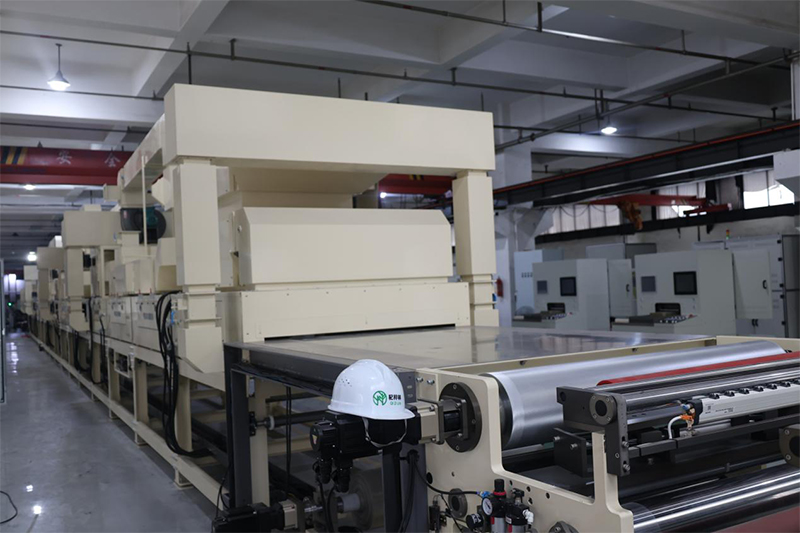
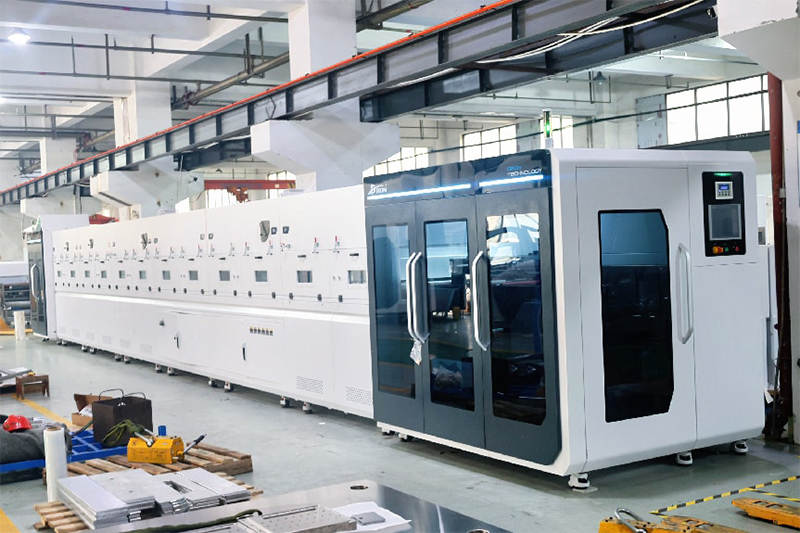
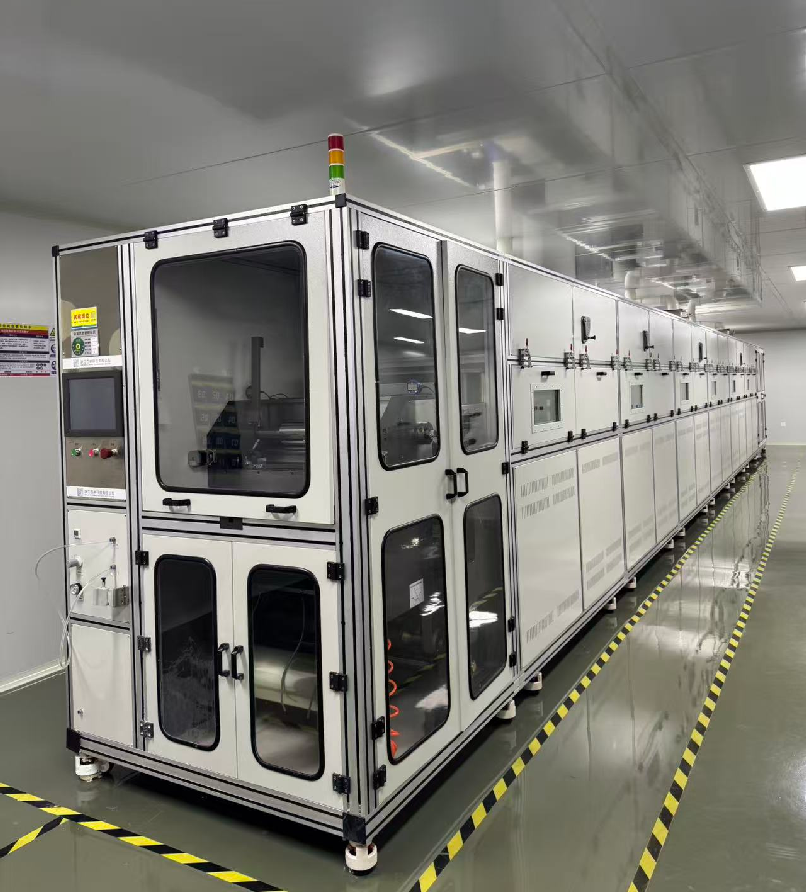
Tape Casting is the core process for the thinning and large-scale production of multilayer piezoelectric ceramics. It can produce uniform ceramic thin sheets with a thickness of 5-50μm and an area of >100mm×100mm, solving the technical bottlenecks of dry pressing in thinning (prone to cracking when <50μm) and large-area (prone to deformation when >50mm×50mm) scenarios. This plan provides a practical tape casting solution from four aspects: process principle, process disassembly, equipment configuration, and parameter optimization.

Electrostatic Chuck (ESC)
The Electrostatic Chuck (ESC) is an ultra-clean wafer carrier suitable for vacuum and plasma working environments. It utilizes the principle of electrostatic adsorption to clamp ultra-thin wafers in a flat and uniform manner. In integrated circuit manufacturing, it serves as a core component in high-end equipment such as thin-film equipment, etchers, ion implanters, and metrology equipment.

Chuck, HEFLOW
Electrostatic Chucks (Electrostatic Chuck, abbreviated as ESC) play an important role in modern high-tech manufacturing processes, especially when handling precision objects such as silicon wafers. They firmly hold workpieces in place through electrostatic force, eliminating the need for traditional mechanical fixtures or vacuum suction, thus simplifying the manufacturing process. Unlike vacuum chucks, electrostatic chucks do not rely on pressure differences, enabling better control and flexibility in wafer processing. Electrostatic chucks are widely used in processes such as plasma etching, chemical vapor deposition (CVD), and ion implantation in semiconductor manufacturing.

Anion Exchange Membrane, AEM
Professor Patric Jannasch, from Lund University in Sweden, is an internationally recognized authority in the field of Anion Exchange Membranes (AEM). His research focuses on the design of new polymer electrolyte materials to address core challenges in clean energy conversion and storage. His pioneering work on poly(aryl piperidinium, PAP)-based anion exchange membranes (Adv. Funct. Mater., 2018, 28, 17027) has led to a surge in research on anion exchange membranes in recent years, injecting new impetus into the development of alkaline membrane fuel cell and electrolyzer technologies.

The Most Comprehensive Process Flow of MLCC
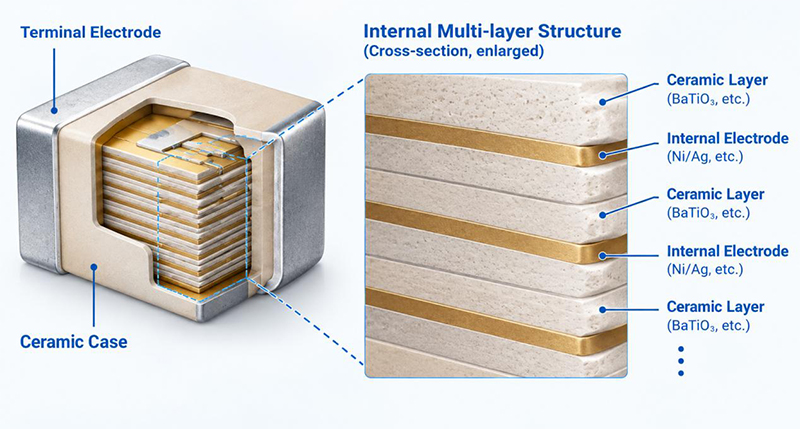
MLCC (Multi-layer Ceramic Capacitor), also known as chip capacitor, laminated capacitor, stacked capacitor, etc., is one of the most widely used capacitors. MLCC is formed by stacking ceramic dielectric films printed with electrodes (internal electrodes) in a staggered manner, sintering them at high temperature to form a ceramic block, and then sealing metal layers (external electrodes) at both ends of the ceramic block.

Thickness Control in Tape Casting for AlN/Si3N4 Ceramic Substrate Manufacturing
In the fabrication of AlN/Si3N4 ceramic substrates, tape casting stands as a pivotal process, especially when it comes to thickness control. Precise thickness management directly impacts the substrate's performance in applications like electric vehicles (EVs) and 5G devices. Here’s how it’s achieved.

Understanding the differences between multilayer ceramic technologies: MLCC, LTCC, and HTCC
Multilayer ceramic technology (MLCC) is a widely used technology in the modern electronics industry, employed in the manufacturing of multilayer capacitors and other electronic components. MLCC (Multilayer Ceramic Capacitor), LTCC (Low-Temperature Co-fired Ceramic), and HTCC (High-Temperature Co-fired Ceramic) are the three main types of multilayer ceramic technologies. Their differences lie primarily in materials, sintering temperature, manufacturing processes, and application fields.

The Tape Casting Process of Zirconia Ceramic Films
With the vigorous development of new material technologies, zirconia (ZrO₂) ceramic films have occupied a crucial position in numerous fields due to their excellent strength, fracture toughness, and ionic conductivity. They have become indispensable materials for solid - state batteries, oxygen sensors, and microelectronic devices. The tape casting process plays a vital role in transforming fine ceramic powders into uniform, ultra - thin (up to tens of micrometers) "ceramic papers".