Leave Your Message
In the world of industrial manufacturing, actually picking the right equipment can make a huge difference when it comes to operational efficiency and the quality of your products. Among all the machines out there, the Ball Mill really plays a key role, especially when it comes to grinding and processing materials. I remember Dr. John Samuel, who's quite the expert and heads up Grinding Solutions Inc., saying, “Choosing the right Ball Mill isn’t just about size or price; it’s about really understanding what you need and how the equipment’s gonna perform in real working conditions.”
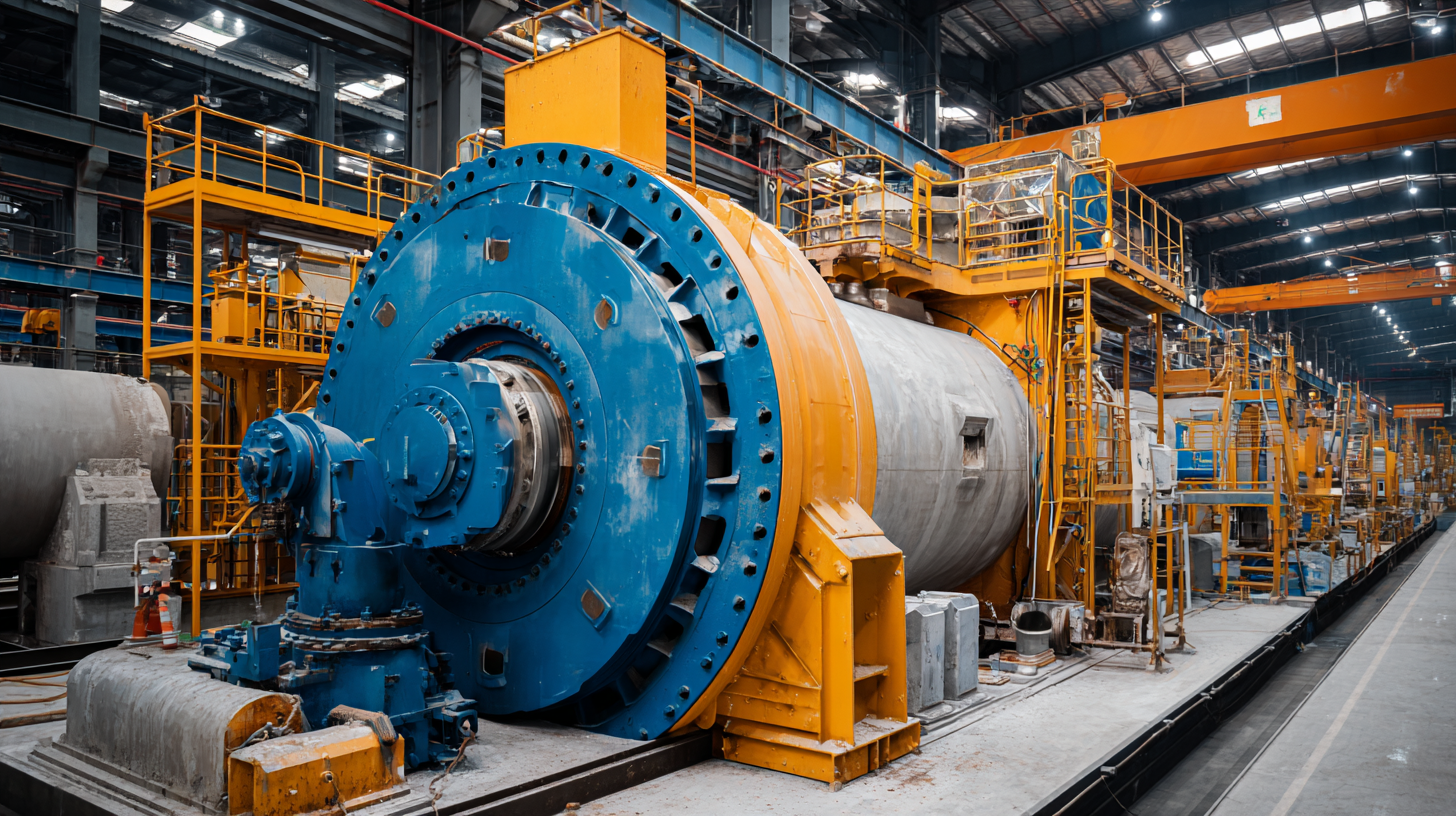
As industries keep changing and evolving, the importance of finding solutions that are perfectly tailoredto your specific needs just keeps growing. The cool thing about Ball Mills is how versatile they are—you can find them everywhere, from making construction materials to chemical production. In this article, I wanna share with you the top 10 tips for choosing the Best Ball Mill that fits your industry’s needs.
Whether you’re a seasoned pro or just starting out, getting a grip on these key points will help you make smarter choices, so you can boost both your efficiency and your overall productivity.
When selecting the best ball mill for your industrial needs, understanding your material requirements is crucial. The properties of the materials you intend to process, such as hardness, moisture content, and particle size, will significantly influence the choice of mill. For instance, a study by the International Journal of Mining Science and Technology indicates that harder materials require more robust milling equipment, often leading to increased energy consumption and wear on the mill components.
One essential tip is to evaluate the material’s specific energy requirements and how they align with the mill's specifications. This means examining not just the capacity but also the design features that cater to your material's characteristics. Additionally, consider the milling environment—whether the process is dry or wet, as this will dictate the type of ball mill needed.
Another important aspect is the size of the balls used in the milling process. According to a report from the Comminution Research Group, smaller balls are more effective for fine grinding and materials with lower hardness, while larger balls are better suited for coarser materials. Thus, matching the ball size to your material's properties ensures optimal milling effectiveness and efficiency. Always take the time to assess these factors thoroughly before committing to a specific ball mill model.
| Material Type | Hardness (Mohs Scale) | Recommended Ball Material | Optimal Ball Diameter (mm) | Capacity (liters) | Grinding Time (hours) |
|---|---|---|---|---|---|
| Limestone | 3-4 | Steel | 40 | 100 | 2 |
| Quartz | 7 | Zirconia | 30 | 80 | 3 |
| Cement | 4-5 | Chrome Steel | 50 | 120 | 1.5 |
| Copper Ore | 3.5 | Steel | 40 | 90 | 2.5 |
| Iron Ore | 4-5 | High Carbon Steel | 50 | 150 | 2 |
| Barite | 3-4 | Steel | 30 | 85 | 2 |
| Gypsum | 2 | Alumina | 20 | 75 | 1.5 |
| Coal | 1-2 | Steel | 25 | 60 | 1 |
| Potash | 2-3 | Ceramic | 35 | 70 | 2 |
| Graphite | 1-2 | Alumina | 15 | 50 | 0.5 |
The pursuit of material precision in modern manufacturing processes has led industries to seek advanced solutions that enhance grinding efficiency. At the forefront of this evolution is the High-Efficiency Roller Ball Mill, a product from Zhejiang Dron Technology Co., Ltd. This innovative milling machine is specifically engineered to meet the demands of precision grinding applications, providing a superior performance that is critical for industries such as ceramics, pharmaceuticals, and materials science.
What sets the High-Efficiency Roller Ball Mill apart is its cutting-edge technology coupled with robust engineering. The mill’s unique roller ball mechanism elevates grinding efficiency, allowing for high-quality powder production while minimizing particle size distribution. Additionally, its compact design facilitates seamless integration into existing production lines, ensuring an uninterrupted workflow that can significantly enhance overall productivity. With a strong emphasis on energy conservation and user-friendly controls, this mill not only promotes sustainable manufacturing practices but also makes achieving precise grinding results more accessible than ever. This powerful tool is essential for any operation looking to elevate its production capabilities while maintaining a commitment to quality and efficiency.
: When selecting a ball mill, consider the properties of the materials you intend to process, including hardness, moisture content, and particle size. These factors greatly influence the type of mill needed.
Harder materials typically require more robust milling equipment, resulting in increased energy consumption and wear on the mill components.
Evaluating the specific energy requirements helps ensure that the ball mill's specifications align with the material characteristics, which can enhance milling efficiency.
Dry ball milling is suitable for materials sensitive to moisture, while wet ball milling can improve dispersion and yield finer particles, making it ideal for high-quality results.
Smaller balls are effective for fine grinding and softer materials, whereas larger balls are better for coarser materials, so matching ball size to material properties is important.
Consider the manufacturer's recommendations for routine maintenance, such as lubrication and parts replacement, and choose a model that allows easy access to key components for efficient upkeep.
After-sales support is crucial; a reliable supplier should offer troubleshooting assistance, technical support, and spare parts availability to ensure operational reliability and performance.
The design, size, type of lining, and milling media used in a ball mill can significantly impact its performance and durability directly affecting the grinding process's efficiency.
Choosing the appropriate type and design of ball mill tailored to specific material processing needs can enhance productivity and longevity in demanding industrial environments.
When choosing the best ball mill for your industrial needs, it is crucial to start by understanding your material requirements to ensure effective milling. Assessing the capacity and size necessary for your production needs can significantly impact efficiency. Additionally, energy consumption and power efficiency are vital considerations, as they affect overall operational costs. Evaluating the compatibility and durability of the materials used in the ball mill will also promote longevity and reliability.
Furthermore, selecting the appropriate type and design of the ball mill tailored to your specific applications is essential. Lastly, reviewing maintenance needs and after-sales support will help in sustaining optimal performance over time. At Zhejiang Dron Technology Co., Ltd., we leverage our expertise as a national high-tech enterprise to provide advanced ball mill solutions that meet the diverse requirements of our clients across various industries.