These days, things are moving super fast in the world of packaging and labeling. Choosing the right Tape Laminator for your business isn’t just a small decision anymore — it’s pretty crucial. I mean, according to Smithers Pira, the global packaging market is expected to hit around $500 billion by 2025, with a huge spike in demand for top-notch laminating solutions. That just goes to show that investing in efficient, flexible tape laminators can really give your production a boost — all while keeping your product’s quality on point.
On top of that, the Packaging Machinery Manufacturers Institute (PMMI) points out that breakthroughs in laminate tech are really changing how companies operate. They’re helping businesses speed things up and cut down on waste. A good Tape Laminator can be a game-changer here, making processes smoother and giving you the versatility to meet different industry needs. As things get leaner and more agile, picking a laminator that checks all the right boxes in terms of specs and applications is pretty much essential if you want to stay competitive.
When you're trying to figure out which Tape Laminator is the best fit, it’s important to think about how tech advancements, changing customer preferences, and sustainability concerns are shaping the future of packaging. Being aware of these trends fuels smarter decisions — ones that really match up with your goals and what the market’s asking for.

Tape laminators are essential tools in various industries, facilitating the application of protective, decorative, and functional films to surfaces. Understanding the basics of tape laminators is critical for businesses looking to optimize their processes in 2025. These machines come in various types, including cold, hot, and pressure-sensitive laminators, each suited to different requirements. According to a recent industry report by Smithers Pira, the global laminating market is expected to grow at a CAGR of 4.1%, reaching over $24 billion by 2025, underscoring the increasing demand for efficient lamination solutions.
Cold laminators are ideal for sensitive materials that cannot withstand heat, making them popular in the graphic design and photo printing industries. On the other hand, hot laminators provide a stronger bond and are typically used in packaging and labeling applications. Pressure-sensitive laminators offer versatility and ease of use, catering to a wider range of substrates. The growth in e-commerce and packaging industries, as indicated in a report by Statista, suggests that businesses must carefully assess their specific needs to choose the right type of tape laminator and stay competitive in the market. Understanding these fundamentals will not only enhance productivity but also lead to cost savings in the long run.
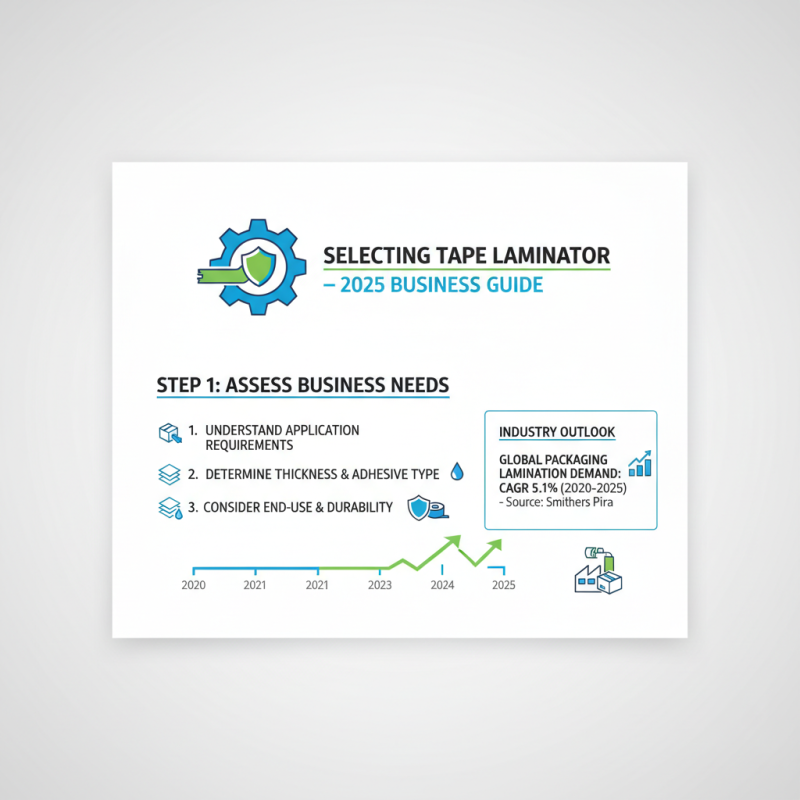
When selecting the right tape laminator for your business in 2025, the first step is to thoroughly assess your business needs. Tape lamination is essential for a range of industries, from packaging to graphic design, where durability and presentation play a crucial role. According to a recent industry report by Smithers Pira, the global demand for packaging applications that utilize lamination is projected to grow at a compound annual growth rate (CAGR) of 5.1% through 2025. Understanding your specific application requirements, such as thickness, adhesive type, and end-use, will help narrow down your choices significantly.
Additionally, it’s vital to consider the production capacity your business requires. For instance, businesses with high-volume needs may gravitate towards more advanced machines capable of handling larger rolls and faster processing speeds. The Freedonia Group highlights that the market for laminating equipment is seeing a shift towards machines that offer automation and efficiency, with businesses increasingly focusing on reducing overhead costs. By aligning your laminator's capabilities with your production goals, you ensure you choose a machine that not only meets your current demands but can also adapt to future growth, providing a significant return on investment.
When selecting a tape laminator for your business in 2025, there are several key features to consider that can significantly impact the efficiency and quality of your laminating projects. Firstly, assess the laminator's speed and temperature settings. A machine that offers adjustable temperature controls will allow you to tailor settings according to different media types, ensuring optimal results. Additionally, look for laminators with quick warm-up times so you can streamline your production process.
Another important feature is the width capacity of the laminator. Depending on your business needs, choose a model that can accommodate varying sizes of materials. This flexibility will enable you to work on diverse projects without the need for multiple machines. Furthermore, consider the laminating film thickness that the device can handle. This is particularly crucial if you plan on laminating items that require added durability and protection.
Tips: Before making a purchase, it's wise to read user reviews and conduct hands-on testing whenever possible. Look for machines that come with warranty options, as they can provide peace of mind regarding long-term use. Don’t forget to evaluate energy efficiency as well; an eco-friendly laminator can reduce operational costs in the long run.
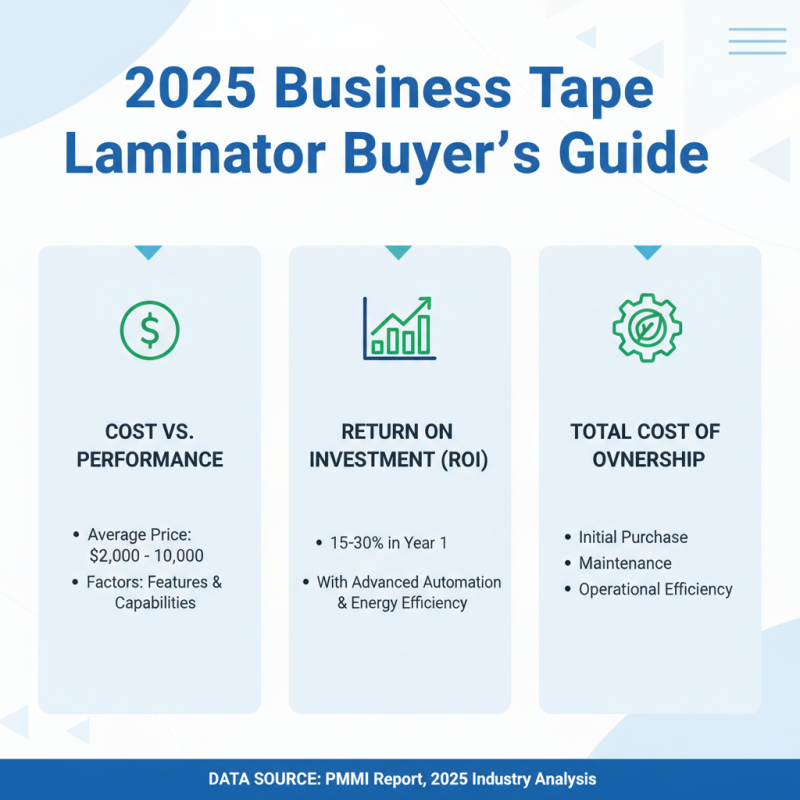
When considering the purchase of a tape laminator for your business in 2025, it's crucial to assess the balance between cost and performance. Industry analysts predict that the average price for a high-quality tape laminator will range from $2,000 to $10,000, depending on the features and capabilities. A recent report from the Packaging Machinery Manufacturers Institute (PMMI) indicates that businesses can expect a return on investment (ROI) of 15-30% within the first year of operation when opting for laminators that offer advanced automation and energy efficiency. This data underscores the importance of evaluating the total cost of ownership, which includes initial purchase price, maintenance, and operational efficiency.
Performance metrics such as speed, versatility, and durability should be at the forefront of your decision-making process. According to a study by Smithers Pira, high-performance laminators can operate at speeds up to 200 feet per minute, significantly boosting productivity compared to lower-end models that average around 50 feet per minute. Furthermore, businesses looking to expand their product line can benefit from models that support various substrate types and thicknesses, thereby reducing waste and increasing flexibility. As market demands shift towards sustainability and cost-effectiveness, selecting a tape laminator that aligns with these performance capabilities will ultimately contribute to enhanced operational efficiency and profitability for your business.
When selecting a tape laminator for your business in 2025, it’s essential to evaluate various brands and models to find a perfect fit for your specific operational needs. The demand for tape laminators has surged, with the market projected to reach over $1 billion by the end of 2025, according to recent industry reports. This growth can be attributed to the rising need for durable, high-quality prints and packaging solutions across sectors like retail, manufacturing, and education. Therefore, your decision should not only focus on the machine's capabilities but also on how it aligns with your business requirements and production volumes.
Key factors to consider while comparing different tape laminators include the machine's speed, ease of use, maintenance needs, and the types of materials it can handle. A survey by the Packaging Machinery Manufacturers Institute indicates that businesses investing in versatile equipment are 20% more likely to increase their operational efficiency. It’s also important to look into user reviews and performance data from existing customers to gauge reliability and service support. Many models now incorporate advanced technology features like automated settings and efficiency monitoring, providing a competitive edge for businesses aiming to optimize their workflows.
When selecting a tape laminator for business needs, maintenance and support should be a top priority. A well-maintained laminator can significantly enhance operational efficiency; studies indicate that companies optimizing their equipment uptime can boost productivity by as much as 20%. Regular maintenance not only prevents unexpected breakdowns but also extends the lifespan of the equipment, leading to increased return on investment over time. A comprehensive maintenance schedule should be established, including routine cleaning, inspections, and replacement of worn parts to ensure the laminator operates at peak efficiency.
Additionally, access to reliable technical support is crucial. Research shows that businesses with robust support systems experience 30% fewer equipment-related interruptions. Look for providers offering extensive warranty options, remote troubleshooting, and on-site support services. Training resources for staff are also invaluable; knowledgeable employees can troubleshoot minor issues before they escalate, thus maintaining workflow continuity. Investing in a tape laminator with strong maintenance and support infrastructures can lead to smoother operations and significant cost savings in the long run.
As businesses move towards greater efficiency and sustainability, the tape lamination technology is evolving rapidly. According to a recent market analysis by Smithers Pira, the global adhesive tape market is expected to reach $67 billion by 2025, driven largely by advancements in lamination techniques. The integration of automation and AI in tape laminators allows for higher production rates and reduced operational costs—key considerations for companies looking to optimize their workflow. The projection suggests that businesses implementing these new technologies can enhance their production efficiency by as much as 30%, setting a precedent for future operations.
Another intriguing trend is the growing demand for eco-friendly materials in tape lamination. A study by Research and Markets highlights that the market for biodegradable adhesives is anticipated to grow by 15% annually through 2025. This shift will not only satisfy regulatory pressures but also meet the increasing consumer preference for sustainable products. As a result, manufacturers will need to incorporate innovative materials and designs into their tape laminators, ensuring that their operations align with environmentally responsible practices while maintaining product integrity. This focus on sustainability will be essential for businesses aiming to stay competitive in a rapidly evolving marketplace.
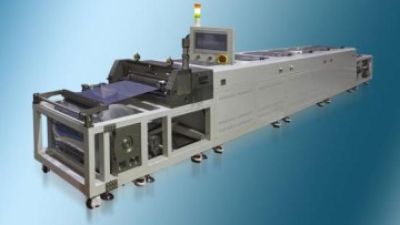
In today's competitive landscape, precision manufacturing is crucial for the production of advanced materials. High-performance large Tape Casting Machines represent a significant technological advancement in this arena, delivering exceptional consistency and uniformity in tape thickness. This capability is vital for industries that rely heavily on high-quality output, such as electronics, batteries, and ceramics. The integration of sophisticated technology ensures that these machines can meet the demanding specifications required by modern manufacturing processes.
The robust design and user-friendly interface of these machines streamline operations, allowing manufacturers to enhance their production efficiency and maintain high-quality standards with ease. Seamless integration into existing production lines minimizes disruption and boosts overall productivity. With a commitment to innovation, these advanced casting machines are poised to elevate the capabilities of manufacturers, enabling them to respond effectively to market demands and stay ahead of the competition. This is an exciting time for precision manufacturing as technology continues to evolve, paving the way for new possibilities and advancements in material production.
: The first step is to thoroughly assess your business needs, including your specific application requirements such as thickness, adhesive type, and end-use.
Production capacity is crucial; businesses with high-volume needs may require advanced machines that handle larger rolls and faster processing speeds.
Key factors include the machine's speed, ease of use, maintenance needs, types of materials it can handle, and user reviews regarding reliability and service support.
Regular maintenance can enhance operational efficiency, potentially boosting productivity by up to 20%, and it also extends the lifespan of the equipment.
Reliable technical support is essential as it can lead to 30% fewer equipment-related interruptions, ensuring smoother operations.
It should include routine cleaning, inspections, and replacement of worn parts to keep the laminator operating at peak efficiency.
It can lead to smoother operations, significant cost savings, and increased return on investment over time.
Look for models with automated settings and efficiency monitoring, as these can provide a competitive edge and help optimize workflows.
By choosing a machine that meets your current demands and has the flexibility to adapt to future production goals, you can ensure it supports your business growth.
User reviews and performance data from existing customers can help gauge the reliability of the machine and the quality of service support available.
In the article "How to Choose the Best Tape Laminator for Your Business Needs in 2025," we explore the essential aspects of tape laminators to guide businesses in their purchasing decisions. It begins with an overview of tape laminators, including the various types available, followed by an assessment of specific business needs that must be considered. Key features to look for in a tape laminator are highlighted, ensuring an informed choice between cost and performance.
Additionally, the article compares different models on the market, emphasizing the importance of maintenance and support to ensure longevity and efficiency. It also addresses future trends in tape lamination technology, preparing businesses for advancements that could influence their operations. Ultimately, this comprehensive guide aims to empower businesses to select the ideal tape laminator tailored to their unique requirements.